
Table of Contents
Introduction: Every Bright Mind Begins at the Dining Table
Every child is born curious. They ask endless questions, imagine impossible worlds, and learn faster than we ever will as adults. Behind this natural brilliance lies a growing brain that needs constant care. While parents often focus on schools, tuition, and activities, one powerful influence quietly shapes a child’s intelligence every single day—food.
Children do not just eat to grow taller or stronger. They eat to think, remember, focus, and feel. This is why Smart Foods for Sharp Minds matter so deeply. The right nutrition supports learning, emotional balance, confidence, and creativity. The wrong food choices, even when made unknowingly, can affect attention, mood, and academic performance.
This blog is a gentle guide for parents who want to nourish their children’s minds with love, not pressure. It explains the best nutrition tips for kids, combining science with human understanding, tradition with modern life, and health with heart.
Why Smart Foods for Sharp Minds Are Essential in Childhood
A child’s brain is under construction every day. From early childhood through teenage years, billions of neural connections are formed. These connections decide how well a child learns, reacts, remembers, and manages emotions.
The brain needs:
- Steady energy
- Essential nutrients
- Healthy fats
- Water
- Emotional calm during meals
When children lack proper nutrition, it doesn’t always show as illness. Often, it appears quietly as:
- Poor focus
- Irritability
- Forgetfulness
- Low energy
- Learning difficulties
Smart Foods for Sharp Minds help prevent these issues before they begin.
The Emotional Side of Nutrition: Food Is Also Love
Food is not just fuel. For children, food is comfort, safety, and connection. A warm meal served with patience does more than nourish the body—it calms the mind.
Children who eat in a peaceful environment:
- Digest food better
- Feel emotionally secure
- Develop a healthy relationship with eating
Nutrition works best when food is served with attention, love, and understanding.
Before nutrients and meal plans, there is emotion.
Children learn how to eat by watching how food is treated at home. A stressful table, force-feeding, or fear-based rules can disconnect children from their natural hunger cues. Human-centered nutrition focuses on connection rather than control.
This means:
- Eating together when possible
- Listening when kids say they are full
- Introducing new foods gently
- Avoiding labels like “good” or “bad” food
When children feel safe at the table, they become more open to foods that truly nourish them.
Understanding How Food Affects the Brain
The brain uses more energy than any other organ. It depends mainly on glucose, but the quality of glucose matters.
- Sugary foods give quick energy, followed by crashes
- Whole foods provide slow, steady energy
This is why children who eat balanced meals tend to:
- Concentrate longer
- Learn faster
- Stay emotionally stable
Smart Foods for Sharp Minds focus on long-term nourishment, not short-term excitement.
1. Whole Grains: Steady Energy for Growing Minds
Whole grains are one of the most important Smart Foods for Sharp Minds. They release energy slowly, helping children stay alert throughout the day.
Best whole grains for kids:
- Brown rice
- Whole wheat
- Oats
- Millets like ragi, jowar, and bajra
How they help:
- Improve attention span
- Prevent sudden tiredness
- Support memory and learning
Simple ways to include:
- Oats porridge for breakfast
- Whole wheat chapati
- Millet dosa or idli
Traditional grains that our grandparents trusted are still some of the best foods for young brains.
2. Fruits and Vegetables: Nature’s Brain Protectors
Fruits and vegetables are rich in vitamins, minerals, and antioxidants. These nutrients protect brain cells and support healthy communication between neurons.
Fruits that support brain health:
- Bananas for memory and mood
- Apples for alertness
- Berries for learning ability
Vegetables that nourish the mind:
- Spinach and leafy greens for focus
- Carrots for brain signaling
- Pumpkin and sweet potato for cognitive support
Encouraging colorful plates makes meals attractive and nutritionally complete.
3. Healthy Fats: The Building Blocks of Intelligence
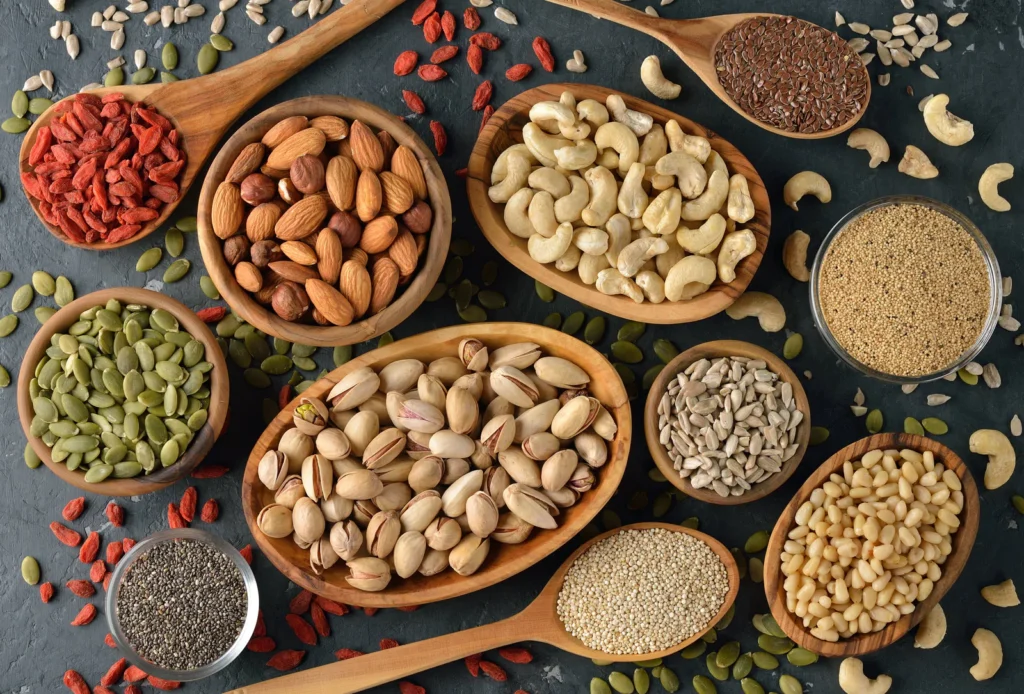
The brain is made up of nearly 60% fat. This makes healthy fats essential in Smart Foods for Sharp Minds.
Best sources of healthy fats:
- Almonds and walnuts
- Flaxseeds and chia seeds
- Coconut oil
- Homemade ghee in moderation
Benefits for kids:
- Support brain cell development
- Improve memory
- Help manage emotions
A small handful of soaked nuts can support mental sharpness in a powerful way.
4. Protein: Helping the Brain Communicate
Protein helps create neurotransmitters—the messengers that allow brain cells to talk to each other.
Protein-rich foods for kids:
- Eggs
- Milk, curd, and paneer
- Lentils and beans
- Nuts and seeds
Why protein matters:
- Improves problem-solving skills
- Enhances focus
- Supports emotional stability
Balanced protein intake keeps children full, calm, and mentally alert.
5. Iron-Rich Foods: Oxygen for the Brain
Iron helps deliver oxygen to the brain. Without enough iron, children may feel tired and struggle to concentrate.
Iron-rich Smart Foods for Sharp Minds:
- Spinach and greens
- Dates and raisins
- Lentils and chickpeas
- Jaggery
Tip:
Combine iron-rich foods with vitamin C, like lemon or orange, for better absorption.
6. Omega-3 Fatty Acids: Memory and Learning Support
Omega-3 fatty acids play a vital role in brain development and emotional regulation.
Child-friendly sources:
- Walnuts
- Flaxseeds
- Chia seeds
Regular intake supports:
- Memory
- Reading ability
- Emotional balance
These fats quietly strengthen learning skills over time.
7. Dairy Foods: Supporting Brain Signals and Strength
Milk and dairy products provide calcium, vitamin B12, and protein, all of which support brain signaling.
Benefits:
- Improve concentration
- Support nerve function
- Strengthen bones
For children who avoid dairy, fortified alternatives can help meet nutritional needs.
8. Water: The Most Ignored Brain Nutrient
Many children drink less water than their bodies need. Even mild dehydration can affect focus and mood.
Signs of dehydration:
- Headaches
- Fatigue
- Irritability
- Poor attention
Encourage children to drink water regularly. A hydrated brain works faster and feels calmer.
Foods That Can Reduce Focus (Limit, Not Fear)
No food needs to be banned completely, but some foods should be limited.
Reduce frequent intake of:
- Sugary snacks
- Soft drinks
- Packaged junk foods
- Artificial colors
These foods can cause energy spikes followed by crashes, affecting learning and behavior.
Smart Eating Habits Create Smart Minds
Nutrition is not only about what children eat but how they eat.
Healthy habits to build:
- Fixed meal times
- Eating together as a family
- No screens during meals
- Slow, mindful eating
A peaceful meal routine improves digestion and emotional well-being.
Teaching Kids About Food Builds Lifelong Wisdom
Children are more cooperative when they understand the purpose of food.
Explain gently:
- “This food helps your brain think better.”
- “These nuts help you remember things.”
- “Water keeps your mind fresh.”
Knowledge builds respect for the body and encourages better choices naturally.https://manivani.site/anti-oxidant-the-silent-guardian-for-body/
Smart Foods for Sharp Minds in Daily Family Life
Smart nutrition does not require expensive foods or complicated recipes. Most traditional home-cooked meals already contain what children need.
A balanced plate with:
- Whole grains
- Vegetables and fruits
- Protein
- Healthy fats
is enough to support strong bodies and sharp minds.
Long-Term Benefits of Smart Nutrition for Kids
Children who grow up eating Smart Foods for Sharp Minds often experience:
- Better academic performance
- Improved emotional control
- Strong immunity
- Healthy habits in adulthood
Nutrition in childhood shapes the future quietly but powerfully.
Conclusion: Nourishing the Mind Is an Act of Love
Every meal is a chance to care for a child’s future. Smart Foods for Sharp Minds are not about perfection or pressure. They are about consistency, balance, and love.
When parents choose nourishing foods and create calm eating spaces, children grow with confidence, clarity, and strength.
Because a sharp mind does not grow from stress—it grows from nourishment, patience, and care.
Source