
Table of Contents
Thiruppugazh is more than just a compilation of devotional songs; it is a live voice of the human spirit calling out to the Divine. It composed by the famous Tamil saint-poet Arunagirinathar, is considered one of Tamil culture’s most valuable spiritual and literary treasures. Even after centuries, these hymns continue to stir hearts, guide minds, and soothe spirits throughout generations.
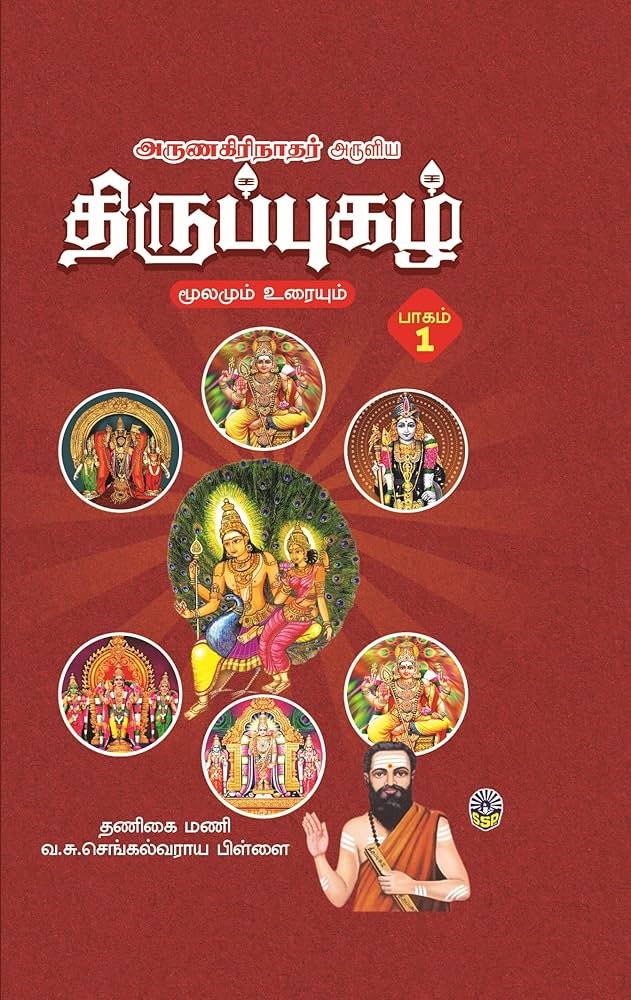
Thiruppugazh is really about the human experience—our challenges, imperfections, hopes, and need for grace. Through these verses, Arunagirinathar does not show himself as an ideal devotee. Instead, he looks to be a very human person, someone who stumbled, struggled, and ultimately found light through surrender and devotion to Lord Murugan.
In his early years, Arunagirinathar lived an ordinary, troubled human life. He made mistakes, followed desires, and paid the price through poverty and rejection. When the weight of his choices became unbearable, he stood face to face with despair. In that fragile moment, he did not hide his pain behind ritual or pride. Instead, he cried out to Lord Murugan—not with polished words, but with raw honesty.
When Arunagirinathar sang Thiruppugazh, it was not performance. It was confession, prayer, and healing woven into sound. His voice carried fear and hope together. He sang as a child seeking protection, as a sinner asking forgiveness, and as a devotee discovering grace. This deeply human tone is why Thiruppugazh feels alive even today.
The Human Story behind Thiruppugazh
To really grasp Thiruppugazh, one must first comprehend the life of Arunagirinathar. His story is about transformation rather than sudden holiness. Born in Tiruvannamalai, Arunagirinathar is thought to have had a life riddled with worldly attachments and personal failings in his early years. He faced poverty, rejection, and intense emotional agony.
When life became terrible, he resorted to Lord Murugan. That moment of surrender transformed everything. Instead of avoiding his pain, Arunagirinathar channelled it into devotion.This is why Thiruppugazh seems so near to the human heart: it talks honestly and without pretence.
At his lowest point, when life felt unbearable, Arunagirinathar stood at the edge—both literally and emotionally. It was in this moment of despair that he turned inward and surrendered completely to Lord Murugan. This act of surrender was not born out of strength, but out of exhaustion and humility. He had nothing left except faith.
Instead of escaping his pain, Arunagirinathar transformed it. His suffering became prayer, and his brokenness became poetry. From this emotional rebirth emerged Thiruppugazh—songs that speak honestly about human weakness while celebrating divine grace. Every verse carries the weight of lived experience, making the hymns feel deeply personal and sincere.
What makes this story so powerful is its honesty. Arunagirinathar never presents himself as perfect. He admits his flaws, his fears, and his failures. he reminds us that spirituality does not require perfection—it requires truth. His journey reassures us that falling is part of being human, and rising is possible through self-awareness and surrender.
The human story behind Thiruppugazh continues to inspire because it reflects our own lives. It tells us that even in moments of shame or despair, transformation is possible. Grace, as it will teaches, does not come only to the flawless—it reaches out to those who are willing to open their hearts.
Thiruppugazh: A Mirror for Human Emotions
One of the most appealing qualities of Thiruppugazh is its emotional depth. These hymns aren’t only about praise. They convey fear, remorse, joy, gratitude, humility, and hope. Arunagirinathar communicates with Murugan as a kid to a parent, a friend to a friend, and occasionally as a broken soul seeking sanctuary.
This humanistic perspective distinguishes Its a devotional writings. The poet does not separate himself from everyday existence. Instead, he welcomes it, accepting human impulses and faults while gently directing the mind towards discipline and spiritual awareness.
In a world where individuals frequently feel criticised or misunderstood, It provides comfort. It reminds us that god does not reject humanity; rather, it embraces it.
Musical Brilliance Rooted in human rhythm
Another notable aspect of musical structure. Arunagirinathar used intricate rhythmic patterns known as chandams, some of which were uncommon or unknown in Tamil devotional literature at the time. Despite their complexity, the melodies flow smoothly, as if they were inspired by the rhythms of breath and heartbeat.
Its both demanding and rewarding due to its musical depth. When sung, the hymns require concentration, discipline, and surrender—much like life itself. The music strengthens the mind, regulates emotions, and fosters inner harmony.
Even if they don’t grasp every word, Thiruppugazh often brings them serenity. This demonstrates how deeply the hymns resonate with the human mind, transcending language and rationality.
Lord Murugan in Thiruppugazh—A Compassionate Guide.
Lord Murugan is shown in friendly and approachable deity. He appears as a kind guide, protector, and healer. Arunagirinathar praises Murugan’s beauty, valour, knowledge, and grace, but also addresses Him as someone who patiently listens to human suffering.
This interaction is profoundly human. Murugan becomes a metaphor of inner strength, the power that allows us to overcome fear, ignorance, and despair. Its teaches that dedication is about finding the fortitude to face life with clarity and faith, rather than escaping from it
Its emphasises characteristics such as humility, self-control, thankfulness, and compassion through Murugan, qualities that make us better human beings rather than just devotees.
Thiruppugazh and the Daily Life
Its relevance to everyday life is one of the reasons it is still popular today. The hymns encourage us to be attentive of our actions, restrain our desires, and live with awareness. They do not want us to withdraw from the world, but rather to live in it ethically and genuinely.
Thiruppugazh is chanted by many devotees amid tough moments, such as illness, emotional stress, bewilderment, and loss. The lyrics provide reassurance, and the rhythm soothes the mind. Thiruppugazh provides both spiritual guidance and emotional comfort.
one of inspires for students, artists, and musicians alike. Its combination of discipline and commitment demonstrates how creativity can be a kind of prayer. Cultural and Spiritual
Thiruppugazh is more than just a religious scripture; it’s a cultural bridge that connects generations. These hymns continue to be sung with reverence and love at temple festivals, classical music concerts, residences, and spiritual gatherings everywhere.
Over time, scholars and musicians have preserved and spread Thiruppugazh, ensuring that its message lives on. However, its ultimate preservation rests in the hearts of regular people who find solace and strength in its words.
In this age of noise and distraction, Thiruppugazh encourages calm, reflection, and inner listening. It teaches that true commitment begins with self-awareness and compassion for both oneself and others.
Why Thiruppugazh is still relevant today.
Modern life is fast-paced, demanding, and frequently stressful. Many people battle with anxiety, identity, and purpose. Thiruppugazh talks directly to this internal turmoil. It does not guarantee instant miracles, but it does provide emotional support and spiritual clarity.
Thiruppugazh promotes balance by accepting human shortcomings while also appreciating heavenly gift. It reminds us that falling is part of the human experience, but rising with faith is a choice we can make every day.
Conclusion: Thiruppugazh is a song of humanity.
Thiruppugazh is a rare gift—a religious work that honours both God and mankind. Arunagirinathar’s poems tell us that spirituality is about sincerity, not perfection. It is about transforming suffering into prayer, ambiguity into clarity, and fear into faith.
This message has remained consistent throughout history: you are not alone, and grace is always available. It will keep singing as long as the human heart searches for significance, comfort, and love.
Source